A new installation starts with knowing what your district requires. From there we install the device, test it, and submit the report so your annual cycle starts clean.
- PriceFree quote
- TimeUsually 1 day
- TestIncluded
- FilingIncluded
How it works
Site visit
We confirm type and size.Approvals
Permits if needed.Install
Usually one day.Test & file
Report sent to your district.
Need it done soon? Most tests are scheduled within a few days.
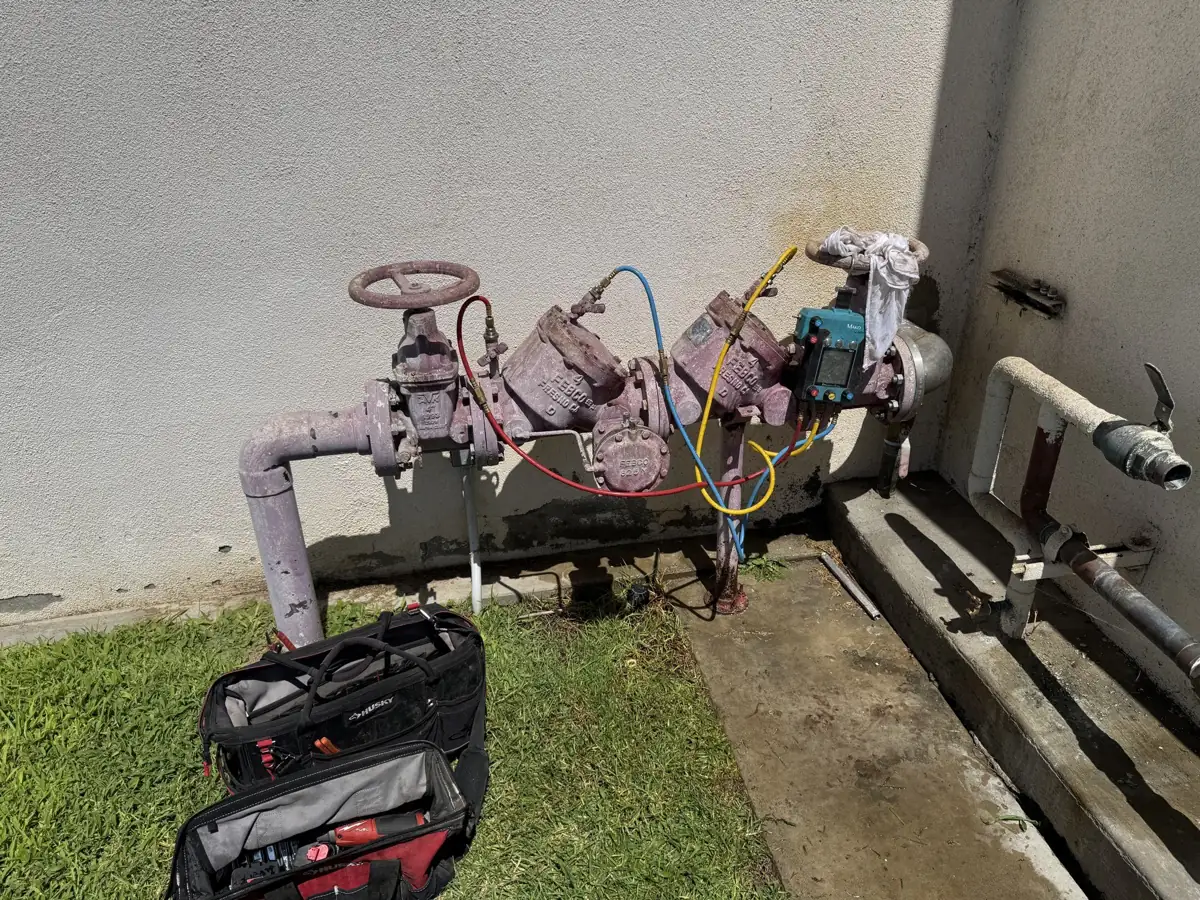
Who usually needs a new device
- New building or new water service
- New irrigation system
- New tenant or change of use
- Your water district says one is required
Picking the right device
Before anything gets installed, we figure out what your water district will accept for your connection. The hazard level decides the device type. High-hazard uses like clinics, car washes and chemical feeds usually need an RP assembly. Lower-hazard lines may use a double check. Irrigation that only faces backsiphonage can often use a PVB or SVB.
Next comes size. The device has to pass the water you use without dropping pressure too much. Most Riverside homes need 3/4-inch or 1-inch devices, while commercial and fire services start around 2 inches.
Getting both right the first time avoids paying for a second install when the district rejects the first.
Built for easy testing and repair
A backflow device isn't a one-time install. It'll be tested every year for as long as it's in place, and repaired from time to time. We install with that in mind.
RPs go above ground with room for the relief valve to drain. Vacuum breakers sit higher than every outlet they protect. Every device gets enough clearance for test hoses, shutoff valves and check covers.
Where theft or freezing is a risk, we'll suggest a locking cage or insulated cover. The goal is a device that passes its first test and stays easy to work on for years after.
From quote to first report
First we look at the site, in person or by photo, to confirm what's needed and where it fits. Then you get a free quote covering the device, the work and the first test.
If permits or district approvals are required, we'll say so at the start and plan around them. Most homes and smaller commercial jobs take a single day.
After installation, we flush the line, test the device and send the first report to your district, which sets its annual due date. You get a copy, and we can remind you before the next test.
Installs for homes
Most residential installs are for new sprinkler systems, pools with auto-fill lines, wells or home fire sprinklers. The device is usually 3/4 inch or 1 inch, and the job takes a day or less.
We'll pick a spot that meets placement rules and is easy to reach for yearly testing, then test it and file the first report.
Commercial and new construction
Commercial installs and new construction often involve plans, permits, larger devices and coordination with other contractors. Fire lines usually need detector assemblies sized 4 inches and up.
We work to your project schedule and make sure the startup test is filed before final inspection.
Changing how a property uses water
New equipment, like a boiler, chemical injector, wash bay or medical device, can raise the hazard at a connection. Turning a space into a different type of business can do the same. Either way, the district may ask for a new or upgraded device.
Planning a change? Call us early. Building the right device into the plan from the start costs less than retrofitting after an inspector catches it.
If you're unsure a device is even required, text us a photo and a quick description of the project. We'll let you know whether one is likely needed, which type and about what's involved, with no obligation. There's no charge for the quote, and most residential jobs are finished in a day.
Our backflow installation services in Riverside
Backflow Preventer Installation
Choosing and installing the right backflow preventer for your property. We match the device to the hazard your district identifies, size it for your water use, handle permits when needed and file the first test report. Free quote after we confirm what your district requires. Most installs are finished in a single day. More about backflow preventer installation.
Backflow Assembly Installation
Proper placement on every assembly we install: above grade where required, high enough to work, and with room to test and repair. We add theft or freeze protection when it makes sense, then test the device and file the first report for you. Moving an existing assembly? We do that too, with a retest afterward. More about backflow assembly installation.
Questions
Which type do I need?
Your water district decides based on how the water is used. We confirm it before we quote.
How often does a backflow preventer need to be tested?
Once a year at minimum. A device also needs testing right after it's installed, repaired or moved. Your water district picks the due date and normally mails a reminder ahead of time.
How we handle backflow installation in Riverside
Our approach is simple. Show up when we say we will, do the work right, and handle the paperwork so you don't have to. Every tester is certified, every gauge is kept in calibration, and filing with your water district is included.
Pricing is clear. Tests are a flat $105 for devices under 4 inches and $175 for 4 inches and larger, and anything beyond the test is quoted before we start. We're available seven days a week from 6am to 12pm, with emergency calls answered 24/7. Most Riverside appointments are within the same week, and you'll have a copy of your report by email when we're done.
Backflow Installation in Riverside and nearby
Need backflow Installation outside Riverside? We also cover Jurupa Valley, Grand Terrace, Colton, Loma Linda and Moreno Valley. Same-week visits are normal, and booking takes a couple of minutes.